
"The retail prices have been raised in the range of Rs 7,000-12,000 across all the four variants," the company said.

Passenger vehicle majors like Hyundai, Tata Motors, M&M, Toyota Kirloskar and Honda on Wednesday reported growth in domestic sales in August riding on festive sentiments, although market leader Maruti Suzuki posted a decline amid a semiconductor shortage affecting the industry. The country's largest carmaker Maruti Suzuki India Ltd (MSIL) reported domestic sales at 110,080 units, as compared to 116,704 units in the same month last year, down 6 per cent. "Sales volume of the company in August 2021 was affected due to electronic components shortage.

Of the 15 car manufacturing companies in India, eight have a market share of below 2 per cent, raising questions about their long-term future in a competitive market that has already seen Ford Motors and General Motors slam the door on India.
Having signed up teen tennis sensation Sania Mirza as brand ambassador for its Getz model, Hyundai Motor India on Monday
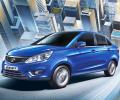
Zest buyers are forced to wait up to six weeks for the automated manual transmission version, available only on this car in the compact sedan segment.

Maruti, Hyundai, Tata Motors, Mahindra & Mahindra and Honda saw their passenger vehicle sales improve in August compared to the same month last year, although Ford and Toyota witnessed a decline.

Strong festive demand in October helped carmakers register a seven-per cent volume growth in the domestic market, even as the largest player, Maruti Suzuki, reported low single-digit growth.

Leading automakers Maruti Suzuki, Hyundai and Tata Motors on Thursday reported robust sales in March as a shift towards personal mobility and pent up demand continued to help companies push dispatches to their respective retail partners. Toyota Kirloskar Motor, Honda Cars and Mahindra and Mahindra (M&M) also reported strong sales last month as compared to the year-ago period, when dispatches were adversely impacted due to the impending transition to BSVI from April 2020 and the nationwide lockdown to contain the coronavirus pandemic. The country's largest carmaker Maruti Suzuki India said its domestic sales stood at 1,49,518 units last month. The auto major had reported sales of 76,976 units in March 2020.

Automobile exports from India recovered in the first quarter with all vehicle segments, including passenger vehicles and two-wheelers, witnessing growth following an improvement in the pandemic situation across various international markets. As per the latest SIAM data, total vehicle exports during the April-June quarter this fiscal stood at 14,19,430 units as compared with 436,500 units in the same period of 2020-21 which saw massive disruptions due to the COVID lockdowns across the country, hampering sales as well overseas shipments. SIAM director general Rajesh Menon told PTI that while two-wheeler shipments were better than previous three years, passenger vehicles, three-wheelers and commercial vehicles export numbers were yet to catch up with numbers in the first quarter of 2018-19 fiscal.
The phenomenal success of Xcent, Grand and Santa Fe increased volumes creating positive momentum
India's second-biggest carmaker Hyundai Motor India on Friday said it would increase prices by almost 3 per cent this month.

White is easy to maintain, looks brighter than other colours over a longer period, is the least commonly rejected colour among family members, has high resale value, provides better safety at night, absorbs less heat in the summer season, makes small cars look bigger, and is not considered inauspicious.

Tata Motors on Friday said it will hike the prices of its passenger vehicles, excluding the Nano, by up to Rs 36,000 from April 1, to offset rising input costs.
South Korean auto giant Hyundai has inaugurated its first $1.1 billion factory in the North American market.\n\n

In his Marathi autobiography Lok Maze Saangati published in 2015, Pawar has lavished praise on Adani describing him as 'hard-working, simple, down to earth' and with ambition to make big in the infrastructure sector.

The Hyundai Verna 4S gets a design makeover.
Hyundai Motor India on Wednesday increased the prices of its mid sized sedan Accent by up to Rs 9,000 and the premium hatchback Getz by up to Rs 7,000 across variants with immediate effect.
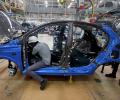
While sales of compact cars, including models such as Swift, Celerio, Ignis, Baleno and Dzire declined, sales of utility vehicles, including Vitara Brezza, S-Cross and Ertiga, increased 26.3 per cent to 19,177 units as compared to 15,178 in the year-ago month.
Under pressure after the instant success of Maruti's 'Swift', Hyundai Motors on Wednesday launched an offensive by reducing prices of its Santro Xing by over Rs 19,000.

Reflecting the mood, passenger vehicle sales in November either remained muted or skidded for most manufacturers as high fuel prices and the higher cost of borrowing dampened buying sentiment.

The company is banking on investments lined up for product development and other innovations.

The MG ZS EV, to be unveiled next month, will go head to head with Hyundai Kona, launched in July this year as the country's first fully electric SUV.
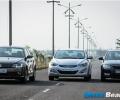
It is as different as chalk and cheese when you step inside the cabin of all these cars.

First-time buyers of cars and sport utility vehicles (SUVs) have made a comeback, shows last year's data from top passenger vehicle (PV) makers. If the trend persists, it may move the needle on the overall car penetration ratio. India's car penetration ratio is 32 per 1,000 people - one of the lowest, compared to mature car markets like the US and Europe.

India's electric mobility goal, which has so far been riding on two wheels, is all set to graduate to four wheels. At least, the journey has begun. Hyundai Motor India said it would invest Rs 4,000 crore till 2028 to launch half-a-dozen electric vehicles (EVs) in India. It would eventually straddle premium and mass segments. The first of these - the electrified version of an internal combustion engine (ICE)-powered model - will go on sale as early as next year.

The global semiconductor shortage hit passenger vehicle sales in September, with major manufacturers like Maruti Suzuki, Hyundai and Mahindra & Mahindra reporting a decline in sales on Friday. Kia India and Honda Cars also reported a dip in wholesales last month as compared with the year-ago period. Carmakers like Tata Motors, Toyota Kirloskar Motor, Nissan and Skoda, however, reported an increase in passenger vehicle dispatches last month despite supply chain issues.

It plans to increase India sales by a tenth, helped largely by launches next year

Ahead of the peak festive season, India's passenger vehicle makers are staring at a cumulative order backlog of nearly 500,000 units as chip shortage continues to cripple production. The crisis is forcing companies to change their production plans frequently and take a call on the variants they can manufacture based on the availability of semiconductors. The booking numbers are not a true reflection of demand, said manufacturers.

Maruti Suzuki has topped the after-sales customer service satisfaction.

The compact segment where Sonet will be launched is crowded with the Maruti Vitara and Brezza, which top the sales' list, and a bevy of models from Mahindra & Mahindra apart from Hyundai's offering. But volumes in this are slightly higher than those in the mid-segment, making it attractive, says Surajeet Das Gupta.
The new version has LED daytime running lights and silver detailing to the lower front bumper.
Hyundai Motor India on Friday hiked prices of its premium small car Santro by Rs 10,500 to Rs 12,000 with immediate effect, company sources said.\n\n\n\n

The facelifted Elantra is a loaded with features and will give it tough to rivals.

The traffic tells a story. During the lockdown, it took 45 minutes to zip through the deserted 35-km stretch from Chennai to reach the automobile heart of Sriperumbudur-Oragadam, where the big names of the car industry - Hyundai Motor India, Renault-Nissan India, Daimler India Commercial Vehicles, Apollo Tyres, and Royal Enfield - are based.

The top end BR-V has been priced at Rs 12.90 lakh as opposed to Rs 14.43 lakh for Creta's top variant

Even as India's passenger-vehicle sales touched a record high of 3.9 million units in 2022-23, growing 27 per cent over the previous financial year, the country's largest carmaker, Maruti Suzuki India (MSIL), said on Monday uncertainties in the electronic-component supplies might affect production in FY24. MSIL said the shortage of electronic components had some impact on production in FY23. "The company took all possible measures to minimise the impact.

Maruti's compact segment comprising New WagonR, Swift, Celerio, Ignis, Baleno, Dzire, and utility vehicles, including Gypsy, Ertiga, XL6, S-Cross and Vitara Brezza saw robust sales, while the mini segment comprising Alto, S-Presso and Old WagonR saw negative growth.
